


If roads, railways and energy networks are recognised as critical infrastructure because they support national resilience, prosperity and security, why isn't nature?
That was the question at the heart of Rebuilding Nature's recent Case to Treasury webinar, bringing together voices from infrastructure, policy, environmental management and systems thinking to explore what needs to change for nature to be planned, funded, governed and maintained as infrastructure.
The discussion reinforced a simple but increasingly urgent message: Nature already performs critical infrastructure functions.
We just don't treat it that way.
We Don't Have a Nature Deficit, We Have a Systems Deficit.
One of the strongest themes to emerge was that the UK's challenge is not a lack of ecological knowledge, environmental activity, local delivery capability or nature-related investment.
Significant public and private funding already flows into biodiversity, agriculture, flood management, water, infrastructure mitigation, landscape recovery and environmental markets. The problem is that much of this activity remains fragmented.
Different sectors, funding streams, policies and organisations often work towards similar outcomes without a shared framework for coordination. In some cases, incentives even pull in different directions. And the result is a system that struggles to maximise the value of the investment already being made.
Nature Is More Than Natural Capital
The case for nature as infrastructure is not simply environmental. It is economic, social and increasingly strategic.
Today, an estimated 5.7 million properties in England are at risk of flooding, while climate projections suggest flood risk will continue to rise as weather events become more extreme. Natural infrastructure such as wetlands, floodplains, healthy rivers and connected landscapes can play a significant role in reducing those risks.
At the same time, the UK Treasury's Dasgupta Review highlighted that our economies, livelihoods and wellbeing fundamentally depend on nature, yet natural capital has been consistently depleted while other forms of capital have grown. The Review argues that nature should be treated as an asset that underpins long-term prosperity and resilience.
Yet despite providing services every bit as essential as energy, water or transport systems, nature is rarely planned, financed or governed with the same strategic intent.
A helpful distinction emerged during the webinar between natural capital and natural infrastructure. A woodland, wetland or species-rich grassland may be a valuable natural asset, but infrastructure is not simply an asset - it is a connected system that provides services.
From Isolated Projects to a Strategic Nature Network
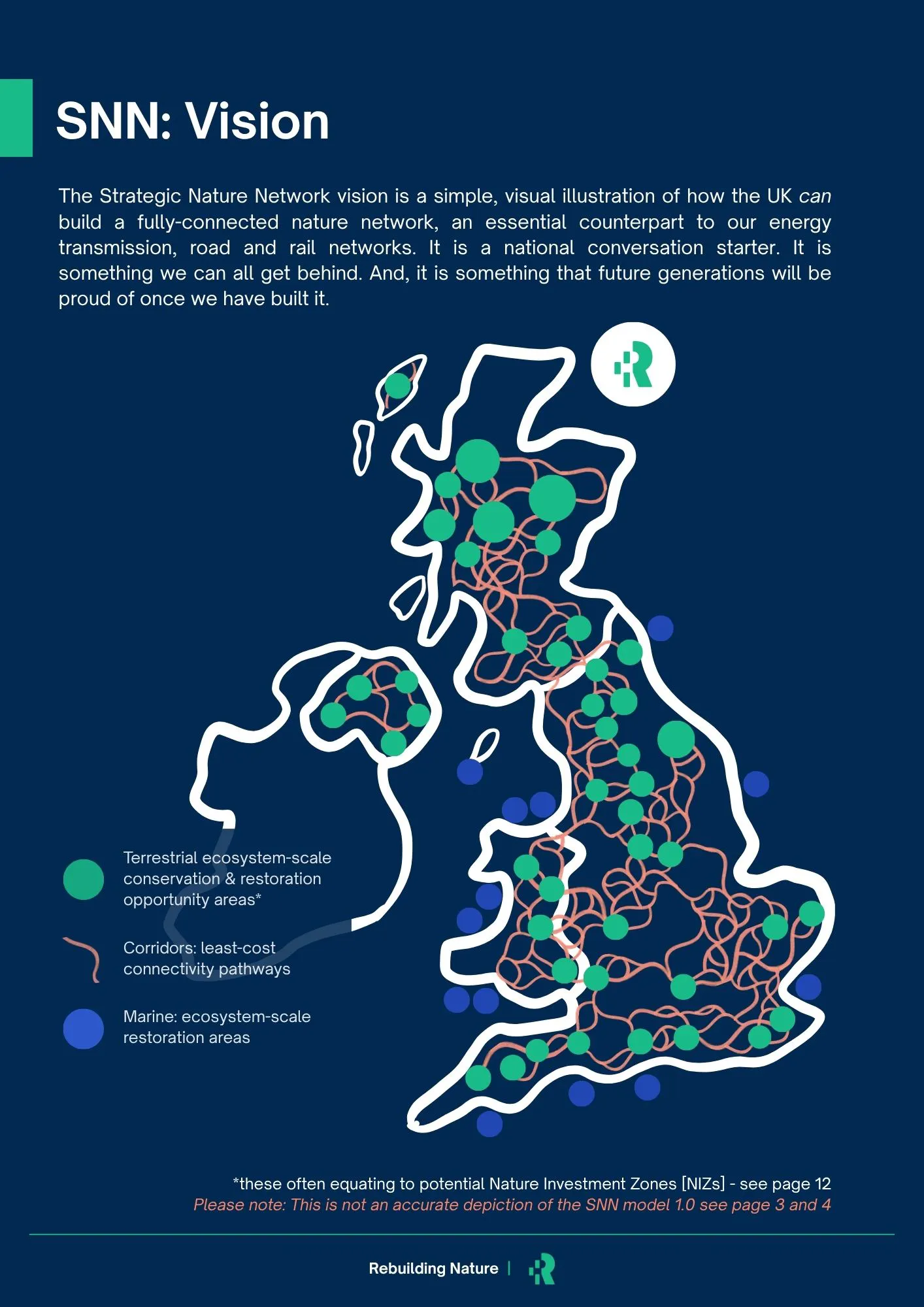
The Strategic Nature Network is intended to provide a shared national framework through which existing investment in nature can be better coordinated and targeted.
Rather than replacing existing initiatives, it seeks to align them around a common outcome: A functioning ecological network capable of supporting biodiversity, climate resilience, water security, food production, flood mitigation and wider societal benefits.
Current analysis suggests that approximately 7.4 million hectares of interconnected ecological assets could form a Strategic Nature Network across the UK, representing around 30% of the UK's land area. Around 3.5 million hectares are already protected, while a further 3.9 million hectares of strategically targeted restoration could create a fully connected network.
Better Outcomes Per Pound Invested
One of the strongest arguments presented during the webinar was economic rather than environmental. The Strategic Nature Network offers a way to improve outcomes per unit of investment by helping public and private actors coordinate activity spatially and strategically.
A more connected ecological system can simultaneously:
- reduce flood risk
- improve water quality
- support agricultural productivity
- enhance biodiversity
- increase carbon sequestration
- strengthen climate resilience
- support community wellbeing
It seems that we're now in a position where we can't afford not to coordinate the investment already being made.
Resilience Has a Geography
One of the strongest themes emerging from both the webinar and subsequent discussions is that resilience is rarely delivered through isolated projects.
Flooding, drought, overheating, declining water quality and biodiversity loss do not respect administrative boundaries. They operate across landscapes, catchments and ecological networks.
The National Audit Office has highlighted the growing scale of flood risk in England and the increasing pressure on public investment needed to protect people, businesses and infrastructure.
A Strategic Nature Network offers an opportunity to think differently, helping coordinate investment across places where interventions can generate multiple benefits simultaneously, rather than treating each issue as a separate problem.
Building the Operating Environment
The webinar also highlighted that scaling nature recovery is not simply about projects. It’s about creating the operating environment that allows projects, policies, funding streams and organisations to work together. This requires better governance, clearer national direction, stronger investment frameworks, consistent evidence and monitoring, practical delivery mechanisms, and greater collaboration across sectors. It also requires stronger narratives.
One of the recurring observations was that many organisations still struggle to understand why nature matters to them, how ecological connectivity supports their objectives, and the practical benefits of investing in natural infrastructure.
If we want nature to be treated as infrastructure, we need to become much better at communicating its value.
Nature Investment Zones
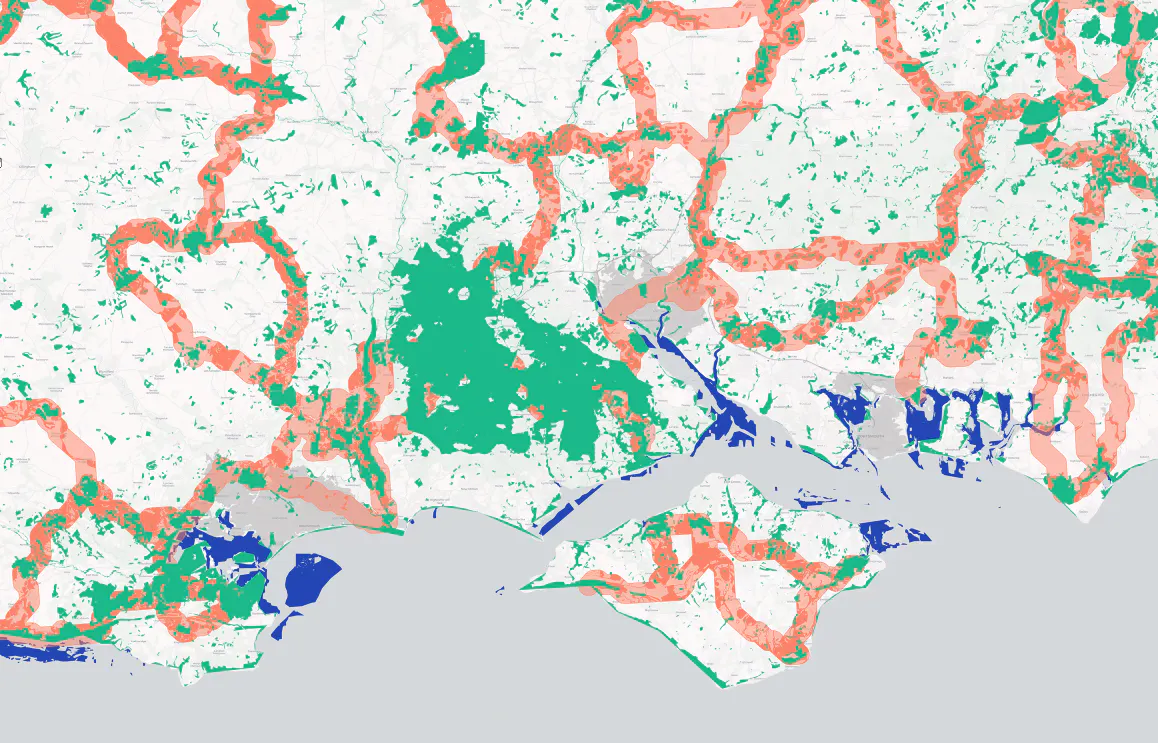
As part of this wider vision, Rebuilding Nature is developing Nature Investment Zones (NIZs) as the practical delivery mechanism for the Strategic Nature Network. The ambition is to create place-based, long-term investment programmes that align public and private investment around clearly defined nature recovery priorities.
Nature Investment Zones offer an opportunity to move from isolated projects towards strategic, landscape-scale delivery, helping create the conditions for long-term stewardship and investment.
Nature Is an Economic Sector Too
Another important theme emerging from the webinar was that nature recovery should increasingly be recognised as an economic sector in its own right. Nature recovery doesn't only create environmental outcomes. It supports jobs, consultancies, data providers, technology developers, ecological specialists, land managers, contractors, investors and delivery organisations.
Seeing nature as infrastructure creates opportunities not only for environmental improvement, but also for innovation, productivity, local economic growth and long-term resilience. As participants noted throughout the discussion, the goal is not simply to spend more money on nature. It is to create a more coordinated system that delivers better outcomes from the investment already being made.
What Needs to Change?
The conversation repeatedly returned to five themes:
- Better evidence
- Better governance
- Better finance
- Better coordination
- Better storytelling
But perhaps the most important shift is cultural - we need to stop viewing nature as a collection of sites and projects, and begin seeing it as a strategic national asset, because healthy, connected ecosystems don’t simply support wildlife. They support resilience, prosperity, security, health, productivity, and ultimately the infrastructure systems upon which society itself depends.

